
The extraordinary energy demands of AI infrastructure are changing more than the electrical grid. They are changing the risk that data center owners, developers, investors, and operators need to understand.
The enormous power requirements of modern data centers create insurance exposures that extend far beyond the cost of electricity. As facilities become increasingly dependent on continuous power, a disruption can affect equipment, cooling, operations, revenue, contractual obligations, and business interruption at the same time. Strategic Insurance Design evaluates how those interconnected risks are transferred, insured, and ultimately retained by the business.

The Data Center Boom Has Become a Power Story
For years, conversations about data centers centered on computing capacity, connectivity, land, construction, and speed to market.
Increasingly, the conversation is about power.
The International Energy Agency projects that data center electricity consumption worldwide will roughly double from 485 TWh in 2025 to approximately 950 TWh by 2030. In the United States, data centers are expected to account for about half of the growth in electricity demand through the end of the decade.
The concentration of that demand makes the issue even more significant. Unlike electricity growth spread across millions of homes or vehicles, massive data center loads can be concentrated within a relatively small geographic area, creating significant challenges for grid integration.
Nowhere is that more apparent than Texas.
In February 2026, ERCOT reported more than 232,000 MW of proposed large loads in its interconnection process, with data centers representing 72% of that total. For perspective, ERCOT’s all-time system peak was 85,508 MW. The volume of proposed large loads became significant enough that Texas approved a new batch process for studying connections of large electricity users.
Those numbers tell an extraordinary growth story.
From an insurance standpoint, however, they should prompt a different question:
What happens when an asset whose value depends on continuous access to enormous amounts of electricity doesn’t have the power it expects?
That is where the risk conversation changes.
Power Isn’t Just a Utility. It’s a Critical Dependency.
For a traditional commercial property, loss of electricity may cause inconvenience, lost productivity, or temporary business interruption.
For a data center, power is fundamental to the asset’s ability to perform.
Power supports the computing infrastructure itself, but also the cooling, network, security, monitoring, and other systems required to keep the facility operating.
And today’s facilities are becoming increasingly power dense.
That means an electrical disruption can potentially become more than an outage. It can create a chain of consequences involving equipment, cooling, service commitments, revenue, tenant relationships, contractual obligations, and business interruption.
Recent insurance-industry loss analysis underscores the significance of those interdependencies. Allianz Commercial reports that business interruption is the primary driver of data-center claims severity, while power failure is among the causes of major losses. It also notes that shared power, cooling, and connectivity infrastructure can allow a single event to affect multiple stakeholders and multiple insurance policies simultaneously.
This is why leadership should stop thinking about power as simply an operating expense.
Power is part of the risk architecture of the business.
What Every Executive Should Know
The more dependent a business becomes on uninterrupted power, the more important it becomes to understand what happens financially and contractually when that power is interrupted.
For data center leadership, the question isn’t simply:
Do we have redundant power?
The bigger question is:
If our primary power source, backup systems, cooling infrastructure, or another critical dependency fails, where does the financial loss ultimately land?
That question may lead into property insurance, equipment breakdown, business interruption, utility or service interruption, contractual obligations, service-level agreements, construction coverage, cyber exposure, and other areas depending on the circumstances.
But the policy names aren’t the starting point. The business consequence is.
The goal is to understand how your insurance program will perform when your business needs it most.
— Mitchell B. Davis
That belief shapes every Strategic Insurance Design engagement and every recommendation we make.
The Questions We Ask Leadership
With an energy-intensive asset like a data center, Strategic Insurance Design begins by understanding the loss scenario rather than starting with individual policies.
- What happens financially if utility power is interrupted?
- How long can the facility operate without its primary source of power?
- What happens if backup generation or another redundant system fails?
- Could a power disruption damage equipment or compromise cooling?
- What revenue is at risk during an extended outage?
- What contractual obligations or service-level agreements could be triggered?
- Which party has assumed those risks under the applicable contracts?
- Which losses are transferred to insurance, and which remain with the business?
- Are the limits, waiting periods, exclusions, and coverage triggers consistent with the actual exposure?
- What is our catastrophic power-loss scenario, and would our insurance program respond the way leadership expects?
A company can invest heavily in redundancy and still retain significant financial exposure if its contracts, insurance coverage, and assumptions about risk don’t align.
The Risk Doesn’t End at the Grid
The pressure to secure sufficient electricity is also changing how data centers are developed.
Grid capacity and connection timelines have become significant constraints, leading some developers to evaluate on-site or behind-the-meter generation and other power arrangements. Those decisions may solve one business problem while creating an entirely different risk profile. Marsh notes that moving toward on-site generation can alter both the cost and risk profile because the facility may lose the grid as a dependable fallback if generation fails.
That’s an important leadership lesson:
Solving an operational risk can create an insurance risk.
A different power strategy can change equipment values, property exposures, contractual responsibilities, environmental considerations, business interruption scenarios, and the parties responsible when something fails.
The insurance program needs to evolve with the business decision.
One Power Event Can Become Multiple Losses
Consider what can happen when electricity is interrupted at a highly concentrated data center campus.
The immediate event might be electrical. But the financial consequences can spread much further.
A power disturbance can affect cooling. Equipment can be damaged. Operations can stop. Customers may experience service interruptions. Service-level commitments may be triggered. Revenue can be interrupted. Restoration may depend on specialized equipment with long replacement lead times.
Marsh notes that data center SLA failures involving power, cooling, or connectivity can lead to service credits, refunds, tenant termination, business interruption, reduced asset value, and pressure on investor confidence.
At that point, leadership isn’t dealing with one risk. It’s dealing with interconnected risk.
And that is precisely where evaluating insurance one policy at a time can become inadequate.
Strategic Insurance Design for Data Center Energy Risk
Strategic Insurance Design evaluates the insurance program from the perspective of the business rather than starting with individual policies.
For data center owners, developers, operators, investors, and other stakeholders, that means understanding how three elements work together:
Insurance coverage: What losses are actually insured, under what circumstances, for how long, and subject to what limits, exclusions, deductibles, waiting periods, and conditions?
Contractual risk transfer: Who has agreed to assume the risk among the owner, operator, tenant, utility, developer, contractor, equipment provider, power provider, or other parties?
Retained financial exposure: After insurance and contractual risk transfer are considered, what financial consequences still remain with the organization, and are they consistent with leadership’s appetite for risk?
Those questions should be answered before a major power event, not while the organization is trying to recover from one.
The Insurance Program Has to Evolve With the Asset
Data center risk is not static.
The risk profile changes from site selection and power procurement through construction, commissioning, operation, expansion, and retooling. Power requirements, cooling systems, equipment concentration, contractual commitments, and operating assumptions can all change along the way. Recent industry analysis similarly warns that insurance and contractual assumptions appropriate during one stage of a data center’s lifecycle may not remain appropriate during the next.
As the asset changes, the insurance strategy needs to be reevaluated.
A program designed around yesterday’s facility may not reflect tomorrow’s power density, equipment values, contractual commitments, or business interruption exposure.
The Bigger Question
AI is creating an extraordinary infrastructure opportunity.
But the same power requirements making these facilities possible are also creating new dependencies and concentrations of risk.
The question for leadership is therefore larger than:
Where will the power come from?
It is:
What happens to our business if that power isn’t there – and have we structured our insurance program around the answer?
That’s the kind of question that should be addressed while the business still has the opportunity to do something about it.
Continue the Conversation
The MB Davis Group provides independent commercial insurance consulting for organizations operating in complex, risk-driven environments, including data centers and digital infrastructure.
Through Strategic Insurance Design, we help leadership evaluate how insurance coverage, contractual risk transfer, and retained financial exposure work together across the business so the insurance program reflects the organization’s actual operations, dependencies, and appetite for risk.
If your organization is developing, investing in, operating, or expanding data center infrastructure, we welcome the opportunity to discuss whether your insurance strategy has evolved with the risk.
“The most important question isn’t whether your company has insurance. It’s whether your insurance program will perform the way you expect when your business faces its most significant loss.”
— Mitchell B. Davis
Founder | Senior Consultant | Strategic Risk Advisor
Independent Commercial Insurance Consultant
About The MB Davis Group
The MB Davis Group is an independent commercial insurance consulting firm specializing in Strategic Insurance Design for businesses operating in complex, risk-driven industries. We help organizations evaluate how insurance coverage, contractual risk transfer, and retained financial exposure work together to support operational and financial stability.
Frequently Asked Questions
Why does data center energy use create insurance risk?
High electricity demand creates critical dependencies on utility service, electrical infrastructure, backup generation, cooling, and other systems. A disruption can potentially lead to equipment damage, business interruption, lost revenue, contractual obligations, and other financial consequences, making it important to evaluate the complete loss scenario rather than power failure in isolation.
What insurance exposures can result from a data center power outage?
Depending on the cause and policy terms, relevant exposures may involve property damage, equipment breakdown, business interruption, utility or service interruption, contractual obligations, and other areas. The more important question is which financial consequences are actually covered, transferred contractually, or retained by the business.
Why are service-level agreements important to data center insurance strategy?
Service-level agreements can create financial obligations when uptime, power, cooling, connectivity, or other performance requirements are not met. Depending on the agreement, consequences can include service credits, lost revenue, tenant rights, and other contractual exposures.
Does backup generation eliminate data center power risk?
No. Redundancy can reduce operational risk, but it does not eliminate financial or insurance exposure. Backup systems can fail, fuel or equipment dependencies can emerge, and alternative power arrangements may introduce new property, equipment, contractual, or operational risks.
How does Strategic Insurance Design apply to data centers?
Strategic Insurance Design evaluates how insurance coverage, contractual risk transfer, and retained financial exposure work together across the data center’s actual risk profile. The objective is to help leadership understand how the insurance program is expected to perform under real-world loss scenarios before a significant event occurs.
When should a data center company reevaluate its insurance program?
Insurance strategy should be reevaluated when the underlying risk changes, including during development, construction, commissioning, operational expansion, major equipment upgrades, changes in power strategy, new tenant or service commitments, acquisitions, or significant changes in contractual obligations.
Sources and Reference Links
The following sources provide supporting context and reference material for the data center energy and insurance risks discussed in this article.
- International Energy Agency (IEA) – Energy and AI: Executive Summary – Supports projections for global data center electricity consumption and U.S. electricity-demand growth.
- International Energy Agency (IEA) – Energy Demand from AI – Supports discussion of concentrated data center electricity demand and grid-integration challenges. Open source
- ERCOT – Monthly Operational Overview, February 2026 – Supports Texas large-load interconnection figures, data center share of proposed large loads, and comparison with ERCOT system peak. Open source
- Allianz Commercial – Data Center Construction Risks Q&A – Supports discussion of business interruption, power failure, shared infrastructure, and interconnected data center loss scenarios. Open source
- Marsh – Powering the Data Surge – Supports discussion of grid constraints, on-site/behind-the-meter generation, and how alternative power strategies can change the risk profile. Open source
- Marsh – Service-Level Agreement Parametric Insurance for Data Centres – Supports discussion of SLA failures, service credits, refunds, tenant termination, business interruption, asset value, and investor confidence. Open source
- Marsh – Data Center Lifecycle – Supports discussion of changing insurance and contractual risk across development, construction, commissioning, operation, and expansion. Open source
- The MB Davis Group – Data Center Construction Risk & Insurance – Prior MBD article providing context for the firm’s established data-center risk narrative. Open source
Read More - Commercial Insurance Strategies and Risk Management
 When Power Becomes the Risk—The Insurance Challenge Behind the Data Center Boom
When Power Becomes the Risk—The Insurance Challenge Behind the Data Center Boom
 5 Reasons Companies Are Turning to Strategic Insurance Design
5 Reasons Companies Are Turning to Strategic Insurance Design
 When Catastrophe Hits the Plant: The Insurance Question Most Companies Never Ask
When Catastrophe Hits the Plant: The Insurance Question Most Companies Never Ask
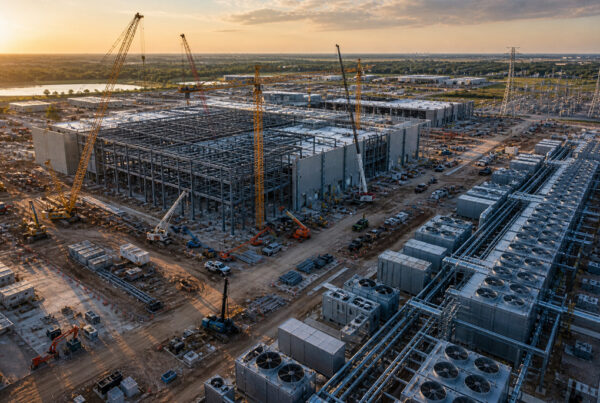 The $20B Mistake: How Early Risk Decisions Cascade in Data Center Development
The $20B Mistake: How Early Risk Decisions Cascade in Data Center Development
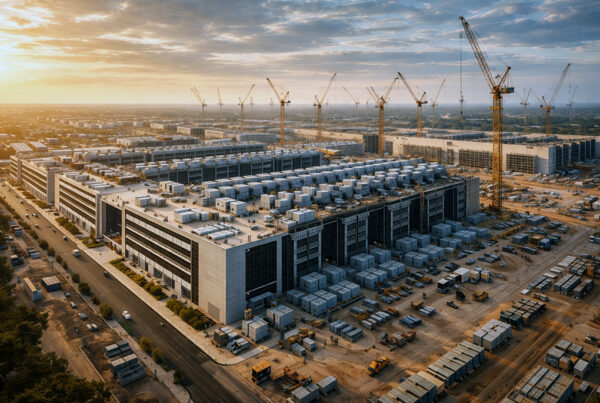 The AI Infrastructure Boom: Why Data Centers Are Reshaping Construction Risk