
The Insurance Question Most Companies Never Ask
It is 2:17 a.m. and the phone rings.
No owner, executive, plant manager, or board member wants to receive that call.
A fire has broken out at the facility. Emergency responders are on site, production has stopped, and very little is known about the extent of the damage. Within minutes, leadership is gathering information, making decisions, and trying to understand what happens next.
Before anyone talks about insurance, revenue, or operations, everyone is asking the same question:
Has anyone been hurt?
In the oil and gas and chemical industries, people are always the first concern. Employees, contractors, emergency responders, and the families waiting at home all become part of the story the moment a catastrophic event occurs.
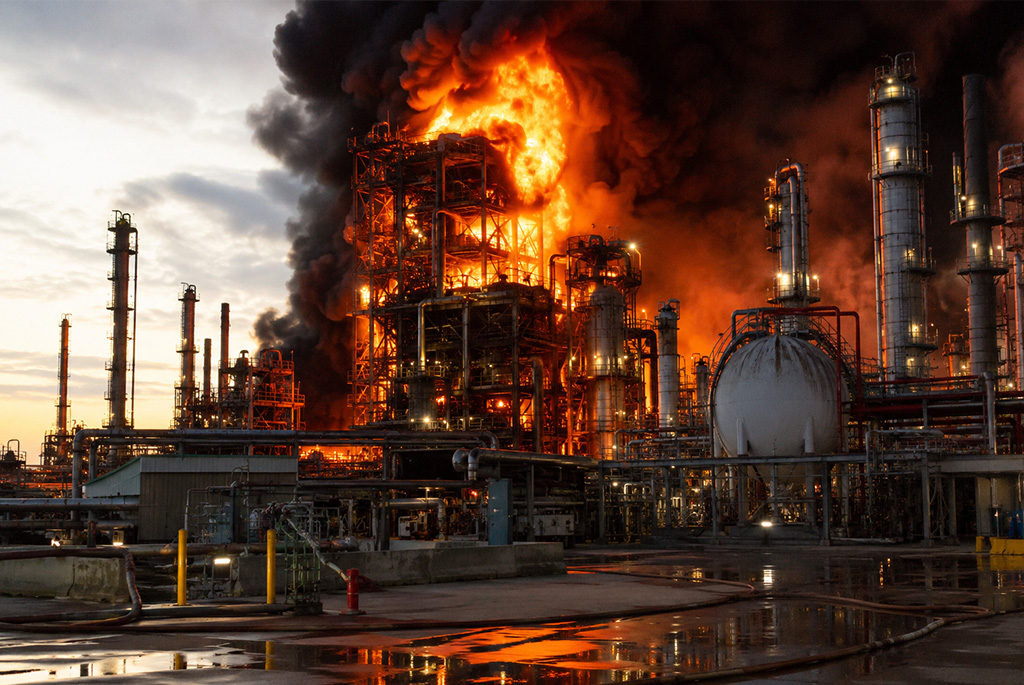
Only after those immediate concerns are addressed does attention begin to shift toward the future of the operation itself.
Can production continue?
How long will the facility be down?
Will customers be impacted?
Can contractual obligations still be met?
What will the financial consequences be?
Most importantly, will the business recover?
For organizations operating complex industrial facilities, these are not hypothetical concerns. They represent the very scenarios leadership teams think about long before an incident occurs and the very outcomes they hope they never have to experience.
The Real Cost of a Catastrophic Event
When people think about a catastrophic loss, they often focus on physical damage. A refinery fire, chemical release, processing facility explosion, pipeline failure, or major equipment breakdown creates an immediate and visible impact.
Yet the building itself is often only one part of the loss.
The true financial consequences extend well beyond damaged property. Operations may be interrupted for weeks or months, revenue can decline rapidly, customers may seek alternative suppliers, and contractual obligations often remain in force even when production has stopped. Leadership suddenly finds itself navigating operational disruption, financial uncertainty, and the pressure to restore confidence among employees, customers, lenders, and stakeholders.
For many organizations, what they fear most is not the event itself.
It is the uncertainty that follows.
How long will recovery take?
What costs will be absorbed by the business?
Will insurance respond the way leadership expects?
Those questions often determine whether an organization experiences a temporary setback or a long-term financial challenge.
The Insurance Question Most Companies Never Ask
Most insurance discussions focus on premiums, renewals, deductibles, and market conditions. Those conversations are important, but they often overlook a more strategic question:
What is the catastrophic loss scenario for our business, and would our insurance program respond the way we expect?
At The MB Davis Group, this is often one of the first questions we ask when evaluating an insurance program.
Why?
Because insurance programs are rarely tested during renewals.
They are tested during catastrophic events.
The true value of an insurance program is not determined by how it looks on paper or how competitive the premium may be. Its value is ultimately measured by how it performs when the business faces one of its most significant challenges.
For many organizations, answering this question is not as simple as it appears.
Why Insurance Programs Become Vulnerable Over Time
Insurance programs rarely become vulnerable overnight.
Complexity tends to build gradually as facilities expand, operations evolve, acquisitions occur, contracts change, and additional layers of coverage are added over time. Each decision may make sense individually, yet leadership can gradually lose visibility into how the entire insurance program functions as a coordinated system.
Coverage may exist.
Policies may renew.
Requirements may be satisfied.
Yet critical questions often remain unanswered.
How do contracts impact exposure?
What financial risk is the company retaining?
Would coverage respond the way leadership expects in a major loss?
These are the types of issues that often remain hidden until a significant event forces the organization to find the answers.
The Role of Strategic Insurance Design
This is where Strategic Insurance Design becomes critical.
As an independent commercial insurance consulting firm, The MB Davis Group helps organizations evaluate how their insurance programs perform under real-world conditions. Rather than reviewing policies individually, Strategic Insurance Design examines how the entire insurance program functions across the business.
The process focuses on three critical elements:
- Insurance coverage
- Contractual risk transfer
- Retained financial exposure and client appetite for risk
Together, these elements influence how risk is transferred, retained, and managed throughout the organization.
For a chemical manufacturer, that evaluation may involve environmental liability, operational continuity, business interruption exposure, and contractual obligations with suppliers and customers.
For an energy company, it may involve infrastructure risk, catastrophic property exposure, transportation liabilities, contractor relationships, and operational dependencies across multiple facilities.
Every organization faces a different set of risks.
Every leadership team has a different tolerance for financial exposure.
The objective is not simply purchasing insurance.
The objective is understanding how the insurance program will perform when the business needs it most.
The Leadership Question
When catastrophe strikes, insurance becomes far more than a policy.
It becomes part of the organization’s ability to recover, continue operating, meet obligations, and move forward with confidence.
That is why leadership should periodically ask:
What is the catastrophic loss scenario for our business, and would our insurance program respond the way we expect?
The answer often reveals more about the strength of an insurance program than any renewal discussion ever will.
And it is frequently where Strategic Insurance Design begins.
“The most important question isn’t whether your company has insurance. It’s whether your insurance program will perform the way you expect when your business faces its most significant loss.”
— Mitchell B. Davis
Founder | Senior Consultant | Strategic Risk Advisor
Independent Commercial Insurance Consultant
About The MB Davis Group
The MB Davis Group is an independent commercial insurance consulting firm specializing in Strategic Insurance Design for businesses operating in complex, risk-driven industries. We help organizations evaluate how insurance coverage, contractual risk transfer, and retained financial exposure work together to support operational and financial stability.
Frequently Asked Questions
What is catastrophic insurance risk?
Catastrophic insurance risk refers to the financial and operational exposure businesses face after major events such as fires, explosions, equipment failures, or large-scale operational shutdowns.
What is Strategic Insurance Design?
Strategic Insurance Design evaluates how insurance coverage, contractual risk transfer, and retained financial exposure work together to support operational and financial stability.
Why is business interruption coverage important after a catastrophic event?
Business interruption coverage can help organizations manage operational downtime, revenue disruption, and ongoing financial obligations during recovery.
How can insurance programs become vulnerable over time?
Insurance programs can become vulnerable as operations expand, contracts evolve, and coverage layers change without a full evaluation of how the program functions together.
What questions should leadership ask about catastrophic risk?
Leadership should ask whether the organization fully understands its catastrophic loss scenarios and whether the insurance program would respond as expected during a major event.
How does The MB Davis Group help businesses manage catastrophic insurance risk?
The MB Davis Group helps organizations evaluate insurance coverage, contractual risk transfer, and retained financial exposure to better understand how their insurance program may perform during catastrophic events.
Read More - Commercial Insurance Strategies and Risk Management
 When Power Becomes the Risk—The Insurance Challenge Behind the Data Center Boom
When Power Becomes the Risk—The Insurance Challenge Behind the Data Center Boom
 5 Reasons Companies Are Turning to Strategic Insurance Design
5 Reasons Companies Are Turning to Strategic Insurance Design
 When Catastrophe Hits the Plant: The Insurance Question Most Companies Never Ask
When Catastrophe Hits the Plant: The Insurance Question Most Companies Never Ask
 The $20B Mistake: How Early Risk Decisions Cascade in Data Center Development
The $20B Mistake: How Early Risk Decisions Cascade in Data Center Development
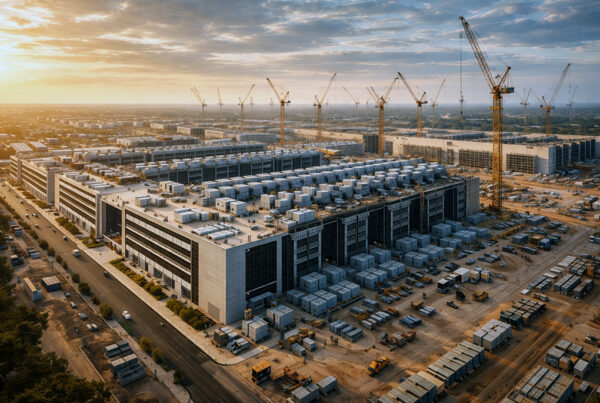 The AI Infrastructure Boom: Why Data Centers Are Reshaping Construction Risk