
Why business leaders are looking beyond policy placement to better understand how insurance supports the business.
Strategic Insurance Design helps leadership understand how insurance coverage, contractual risk transfer, and retained financial exposure work together across the business. Rather than focusing solely on policy placement, it evaluates how an insurance program supports operational objectives, contractual obligations, financial resilience, and long-term business stability.
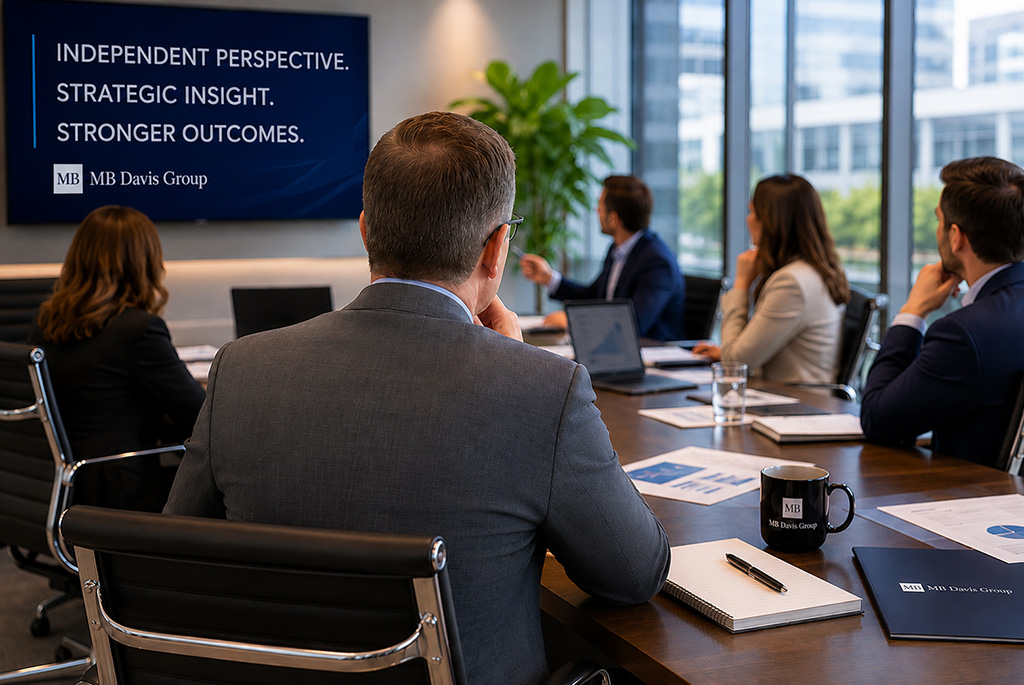
Most organizations don’t question their insurance program until something changes.
A major contract introduces new requirements. The business expands. An acquisition occurs. A claim doesn’t unfold as expected. Sometimes nothing significant happens at all—leadership simply realizes they no longer have a clear understanding of how everything fits together.
At that point, the conversation changes.
It’s no longer about finding another insurance policy.
It’s about understanding whether the insurance program truly supports the business.
That is where Strategic Insurance Design begins.
Why Traditional Insurance Conversations Often Fall Short
Insurance brokers play an essential role in the commercial insurance process. They help organizations obtain coverage, negotiate with insurance carriers, and place policies in the marketplace.
As organizations become more complex, however, leadership often needs something different.
They need an independent perspective that evaluates how the insurance program functions as a coordinated business system—not simply whether individual policies have been renewed.
That is the role of an independent commercial insurance consultant.
What Is Strategic Insurance Design?
Strategic Insurance Design is an independent framework for evaluating how insurance coverage, contractual risk transfer, and retained financial exposure work together to support an organization’s operational objectives, contractual obligations, financial resilience, and long-term business success.
Rather than reviewing policies individually, Strategic Insurance Design evaluates how the entire insurance program supports the organization’s operations, contractual obligations, financial objectives, and long-term stability.
What Every Executive Should Know
Organizations that understand how insurance coverage, contractual risk transfer, and retained financial exposure work together are better positioned to protect operations, strengthen financial resilience, and make informed decisions before significant losses occur.
The goal is to understand how your insurance program will perform when your business needs it most.
— Mitchell B. Davis
That belief shapes every Strategic Insurance Design engagement and every recommendation we make.
The Questions We Ask Leadership
Every Strategic Insurance Design engagement begins by stepping back from individual policies and evaluating the insurance program as a whole.
We help leadership answer the questions that matter most:
- Is our insurance program working the way we think it is?
- Where are we retaining more risk than we realize?
- How do insurance coverage, contractual risk transfer, and retained financial exposure work together across our business?
- If a significant loss occurred tomorrow, would our insurance program respond the way we expect?
These are the questions that drive Strategic Insurance Design—and the answers help leadership make more informed decisions about risk, operations, and long-term financial stability.
Five Reasons Companies Are Turning to Strategic Insurance Design
1. Insurance Programs Become More Complex Over Time
Insurance programs rarely become complex overnight.
Complexity develops gradually through business growth, acquisitions, operational changes, new contractual obligations, and years of renewals. Eventually, leadership loses visibility into how the insurance program functions as a coordinated system.
Strategic Insurance Design helps organizations step back, evaluate the entire program, and restore clarity.
2. Insurance Should Support Business Strategy
Organizations that align insurance decisions with business strategy are often better positioned to manage growth, negotiate contracts, and respond to changing risk environments with confidence.
Strategic Insurance Design aligns insurance with:
- Operations
- Financial objectives
- Contractual obligations
- Risk tolerance
When insurance supports business strategy, leadership is better equipped to make informed operational and financial decisions.
3. Independent Perspective Creates Better Decisions
As an independent commercial insurance consulting firm, our role is to provide objective insight that helps organizations make informed decisions before insurance is purchased or renewed.
We frequently work alongside brokers, attorneys, accountants, lenders, developers, and leadership teams to ensure insurance programs align with the realities of the business.
Our role complements your existing insurance relationships by providing independent oversight and strategic guidance.
An independent perspective helps leadership evaluate insurance decisions through the lens of the business rather than the marketplace alone.
4. Insurance Programs Should Be Evaluated Before a Loss
Most insurance programs are reviewed during the renewal process.
Their true value is revealed during a significant loss event.
One of the most important questions leadership can ask is:
What is the catastrophic loss scenario for our business, and would our insurance program respond the way we expect?
Strategic Insurance Design helps organizations answer that question before a crisis occurs—not after.
5. Better Understanding Leads to Better Outcomes
When leadership understands how insurance coverage, contractual risk transfer, and retained financial exposure work together, the organization is positioned to make stronger operational and financial decisions.
Confidence comes from clarity.
The most important question isn’t whether your company has insurance.
It’s whether the insurance program will perform the way leadership expects when the business faces its most significant loss.
Where Insurance Brokers Fit
Insurance brokers perform an important role in the insurance process. They negotiate with carriers, market insurance programs, obtain coverage, and help organizations secure insurance solutions.
Strategic Insurance Design begins before that process.
It helps leadership understand what the organization actually needs before entering the insurance marketplace.
In our experience, the strongest outcomes occur when an independent consultant and an experienced broker work together—each bringing distinct, non-competing expertise to the table to protect the client’s long-term success.
Continue the Conversation
If your organization is growing, entering new markets, managing increasingly complex contracts, or simply questioning whether your insurance program still aligns with the business, it may be time for an independent perspective.
The MB Davis Group helps leadership teams evaluate how insurance coverage, contractual risk transfer, and retained financial exposure work together through Strategic Insurance Design.
If you’re evaluating whether your insurance program still aligns with the realities of your business—or whether it would perform the way you expect during a significant loss—we’d welcome the opportunity to start that conversation.
“The most important question isn’t whether your company has insurance. It’s whether your insurance program will perform the way you expect when your business faces its most significant loss.”
— Mitchell B. Davis
Founder | Senior Consultant | Strategic Risk Advisor
Independent Commercial Insurance Consultant
About The MB Davis Group
The MB Davis Group is an independent commercial insurance consulting firm specializing in Strategic Insurance Design for businesses operating in complex, risk-driven industries. We help organizations evaluate how insurance coverage, contractual risk transfer, and retained financial exposure work together to support operational and financial stability.
Frequently Asked Questions
What is Strategic Insurance Design?
Strategic Insurance Design is an independent framework for evaluating how insurance coverage, contractual risk transfer, and retained financial exposure work together to support an organization’s operations, financial objectives, and long-term business stability.
Who benefits most from Strategic Insurance Design?
Organizations with complex operations, multiple locations, acquisitions, significant contractual obligations, or rapid growth benefit most from Strategic Insurance Design because it provides greater visibility into how insurance supports the business.
Why do companies work with an independent commercial insurance consultant if they already have an insurance broker?
An independent commercial insurance consultant provides objective guidance on how an insurance program supports the business, while an insurance broker focuses on obtaining, negotiating, and placing insurance coverage.
Rather than selling insurance, an independent commercial insurance consultant evaluates whether the overall insurance program aligns with the organization’s operations, contractual obligations, financial objectives, and long-term risk management strategy.
Through Strategic Insurance Design, The MB Davis Group helps leadership understand how insurance coverage, contractual risk transfer, and retained financial exposure work together across the organization. This independent perspective often complements the work of an existing insurance broker by providing objective guidance before important insurance decisions are made.
What does an independent commercial insurance consultant do?
An independent commercial insurance consultant is an objective advisor who evaluates insurance programs, identifies exposures, reviews contractual risk, and helps leadership align insurance decisions with broader business objectives.
Why do companies use Strategic Insurance Design?
Companies use Strategic Insurance Design to better understand how their insurance programs perform, reduce unexpected exposures, improve contractual alignment, and support stronger long-term business decisions.
How is Strategic Insurance Design different from an insurance broker?
Strategic Insurance Design is an independent evaluation of how an organization’s insurance program supports the business, while an insurance broker focuses on obtaining, negotiating, and placing insurance coverage. The two roles often work together.
When should a company engage an independent commercial insurance consultant?
Companies often engage an independent commercial insurance consultant before major renewals, acquisitions, new projects, significant contractual commitments, or whenever leadership wants greater confidence that the insurance program will perform as expected during a significant loss.
What questions should leadership ask when evaluating an insurance program?
Leadership should ask whether insurance coverage, contractual risk transfer, and retained financial exposure work together to support the organization’s business objectives. Questions about catastrophic loss scenarios, contractual obligations, retained risk, and the organization’s overall risk tolerance often reveal whether the insurance program is aligned with the realities of the business. These are the questions that guide every Strategic Insurance Design engagement.
Read More - Commercial Insurance Strategies and Risk Management
 5 Reasons Companies Are Turning to Strategic Insurance Design
5 Reasons Companies Are Turning to Strategic Insurance Design
 When Catastrophe Hits the Plant: The Insurance Question Most Companies Never Ask
When Catastrophe Hits the Plant: The Insurance Question Most Companies Never Ask
 The $20B Mistake: How Early Risk Decisions Cascade in Data Center Development
The $20B Mistake: How Early Risk Decisions Cascade in Data Center Development
 The AI Infrastructure Boom: Why Data Centers Are Reshaping Construction Risk
The AI Infrastructure Boom: Why Data Centers Are Reshaping Construction Risk
 How This Difficult Insurance Landscape Puts Commercial Real Estate Owners at Risk